
Myrrh Oil: The Ancient Resin Behind 2026’s Calmest Wellness Trend
A plain-English news brief for store owners, formulators and curious shoppers
Myrrh oil is back in the light. Long ago, people traded it like gold. Today, it sits on bathroom shelves in small amber bottles. So why the sudden attention? Because shoppers now look for simple products, and because this warm, smoky resin tells a very old story. In short, it feels honest. And yet, plenty of claims around it are still unclear. This article walks through what myrrh oil is, how people use it, and where the science still needs time.
Quick Answer: What Is Myrrh Oil?
Here is the short version, before the details.
- It is an essential oil made from the resin of Commiphora myrrha, a small, thorny tree.
- The resin is a natural gum. the tree drips this gum when its bark cracks, and growers collect the hardened lumps by hand.
- The scent is warm, earthy, smoky, and a little sweet, with a dry and slightly bitter edge.
- Its history covers perfume, temple incense, and traditional medicine across Africa and the Middle East.
- Today people use it for skin care, oral care, aromatherapy, massage and natural fragrance.
- The research looks good, but early. Most findings come from lab and animal work, not from large human trials.
Figure 1. An unbranded amber bottle of myrrh essential oil, with resin tears beside it.
Why This Story Keeps Growing
Three shifts push myrrh oil into view right now. First, buyers want fewer ingredients, not more. Second, aromatherapy moved from small specialist shops into mainstream retail. Third, formulators keep testing myrrh compounds, because earlier results looked interesting.
Meanwhile, the supply side stayed steady. Harvesting still depends on hand collection, so batches vary in colour and scent. Therefore, good brands now publish more detail about origin and testing. That transparency, in turn, builds trust with shoppers who read labels closely.
What Exactly Is Myrrh Oil?
The Tree Behind the Bottle
Commiphora myrrha grows in dry, rocky ground, mostly in Somalia, Ethiopia and parts of the Arabian Peninsula. The tree is short, tough and full of thorns. Because water is scarce, the tree protects itself with resin. Consequently, the resin carries the tree’s own defence chemistry.
Resin, Not Wood
Growers cut the bark on purpose, then wait. The tree seals the wound with a gummy sap, and that sap hardens into tears. The tears range from pale gold to dark brown. Also, the scent deepens as the resin dries, so older resin smells rounder and heavier.
From Tear to Bottle
Producers sort the tears, clean them, then steam-distil them. Steam carries the volatile aromatics out, and a condenser turns them back into liquid. After that, the oil is filtered and bottled in dark glass. No solvents are needed here. So the process stays simple and clean.
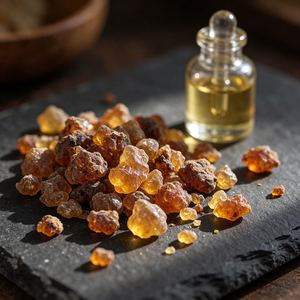
Figure 2. Raw myrrh resin tears on slate, with a dropper bottle of the distilled oil behind them.
Inside the Aroma: The Chemistry in Plain Words
Sesquiterpenes Do the Heavy Lifting
Myrrh oil is rich in sesquiterpenes. These molecules are larger and heavier than the light top notes in citrus oils. Because they evaporate slowly, they give myrrh its long, steady base note. They also appear in much of the published research.
Two Names Worth Knowing
Most product sheets mention curzerene and furanoeudesma-1,3-diene. Both belong to the same chemical family, and both shape the smoky, resinous character. In lab tests, these compounds drew attention for their anti-inflammatory and antimicrobial behaviour. However, a petri dish is not a person, so read those results with care.
Why the Scent Feels Familiar
Inhaling warm resin usually feels calming. The reason is partly physiology. Aromatic molecules reach the limbic system quickly, and that region links scent with memory and mood. Therefore, a scent you met in childhood can settle your breathing before you even name it.
Seven Ways People Use Myrrh Oil Today
1. For Skin That Feels Tight or Irritated
A few drops in a carrier oil can soften rough patches and calm minor irritation. Always dilute first. Also, test a small area, because resin oils can surprise sensitive skin.
2. For a Cleaner Mouth Feel
Traditional mouth rinses often included myrrh, and some toothpaste brands still do. You can add one drop to a rinsing solution, then spit it out. Do not swallow it.
3. For Calmer Evenings
Three or four drops in a diffuser change the mood of a room. The scent is warm rather than sharp, so it suits bedrooms and reading corners. Furthermore, it blends well with citrus and cedarwood.
4. For Cold-Season Comfort
Aromatherapy tradition links myrrh with easier breathing and a soothed throat. Steam inhalation can help you feel more comfortable. Nevertheless, it will not cure an infection, so see a doctor if symptoms drag on.
5. For Massage Blends
Massage carriers such as jojoba or sweet almond spread the oil evenly. Keep the dilution low, near one or two percent. As a result, the blend stays gentle and the scent stays soft.
6. For Natural Fragrance
Myrrh works as a base note in homemade perfume. It holds other notes in place and adds depth. Moreover, it pairs nicely with vanilla, patchouli and rose.
7. For Quiet, Reflective Moments
Many cultures burned myrrh resin during prayer and meditation. The ritual still resonates today. In practice, a slow inhalation before a quiet pause is enough.
What the Research Says, and What It Does Not
What Lab Studies Show
Laboratory work reports antimicrobial, antioxidant, anti-inflammatory and analgesic activity for myrrh oil and myrrh extracts. Some 2024 and 2025 studies also tested myrrh extracts on cancer cell lines. Those results are real, yet they describe cells and animals, not shoppers.
What Human Studies Cover
Human trials are few and narrow. They look at myrrh-containing preparations for oral care, small wound healing and a parasite infection. Notice the wording. Researchers studied formulated products, not neat essential oil dropped into water.
The Honest Limit
Therefore, treat myrrh oil as a supportive, pleasant tool. It can improve a routine. It cannot replace medical care. Also, no regulator has approved it as a drug for any condition.
How to Use Myrrh Oil Safely
Safety habits matter more than enthusiasm. Keep these rules close.
- Dilute everything. mix with a carrier oil before skin contact. One or two percent is plenty.
- Patch test first. put a small drop on the inner forearm, then wait a day.
- Keep it away from eyes. resin oils sting, so rinse well with water if contact happens.
- Pregnancy and nursing: ask a doctor before use, and many labels advise skipping it entirely.
- Children: use far less, or simply diffuse rather than apply.
- Storage: store the bottle in a cool, dark place with the cap tight.
- Freshness: a two to three year shelf life is common, though scent slowly fades.
- Listen to your body. stop at once if you notice rash, nausea or dizziness.
How to Choose a Good Bottle
The market is crowded, so read the label before the marketing.
- Check the Latin name. Commiphora myrrha on the label, not just the word myrrh.
- Look for the method. steam distillation is the standard, clean method.
- Prefer dark glass. amber or cobalt glass protects the oil from light.
- Ask for traceability. a batch number and a test report signal a serious supplier.
- Watch the price. real resin oil is not cheap, so very low prices usually mean dilution.
- Smell before you trust. a smoky, earthy, slightly bitter scent is correct. Sweet and flat is not.
Myrrh Oil or Frankincense: Which One?
People confuse the two, and that is fair. Both come from resin, and both trees grow in similar dry regions. However, they feel different in use.
- Frankincense is brighter, cleaner and more citrus-like, with a balsamic lift.
- Myrrh is earthier, heavier and more medicinal, with a bitter edge.
- Reach for frankincense in light daytime blends, meditation and skin care for mature skin.
- Reach for myrrh in evening blends, oral care and grounding rituals.
In the end, many formulators use both. Together they cover a wide scent range, so a single blend feels complete.
Five Myths, Settled Fast
- Myth one: myrrh and frankincense are the same. Reality: Different species, different chemistry, different scent.
- Myth two: you can apply it straight. Reality: Neat application can irritate skin, so always dilute.
- Myth three: ancient use proves it works. Reality: Ancient use is tradition, not proof. Modern tests are still small.
- Myth four: it never expires. Reality: Older resin keeps its scent for years, yet the bottled oil fades sooner.
- Myth five: more expensive means stronger. Reality: Price tracks harvest, rarity and testing, not magic.
Questions People Ask Most
Where does myrrh oil come from?
Mainly from Commiphora myrrha trees in Somalia, Ethiopia and nearby regions. Harvesters collect the resin by hand, then distilleries turn it into oil.
Can I take myrrh oil by mouth?
Not on your own. Internal use needs professional guidance, and labels usually forbid it. Stick to diffusion, diluted skin use and rinses you spit out.
Is it safe during pregnancy?
Most labels say no. If you are pregnant or nursing, ask your doctor first, and avoid it if you are unsure.
Does myrrh oil help with sleep?
Indirectly. The scent can calm the mind, and a calmer mind often sleeps better. It is not a sedative, though, so treat it as mood support.
How long does a bottle last?
Around two to three years when stored well. Resin itself keeps far longer, and some collectors keep tears for decades.
What does it blend with?
Citrus lifts it, cedarwood warms it, and vanilla softens the bitterness. Rose and patchouli add depth.
The Takeaway
Myrrh oil is old, useful and quietly beautiful. It brings warmth to a diffuser, comfort to sore skin and depth to a fragrance. At the same time, it is not a cure, and honest brands say so. So buy from a supplier who names the species and shares test data. Then use it slowly, dilute it well, and enjoy the scent of a tree that has guarded itself for thousands of years.
Publishing Kit for Your Store
Copy these settings straight into your product page or blog post.
- Suggested SEO title: Myrrh Oil: Ancient Resin, Modern Calm
- Meta description: Myrrh oil is warm, earthy and quietly powerful. Learn what it is, how to use it safely, and how to pick a pure bottle in 2026.
- URL slug: /blogs/news/myrrh-oil-guide
- Primary keyword: myrrh oil
- Secondary keywords: myrrh essential oil, Commiphora myrrha, myrrh oil benefits, myrrh oil uses, myrrh resin, myrrh vs frankincense
- Alt text, Figure 1: Myrrh essential oil in amber glass bottle with resin tears
- Alt text, Figure 2: Raw golden myrrh resin tears on slate with a dropper bottle
- Internal links: frankincense oil guide, essential oil safety guide, resin incense collection
- Schema hints: Article, FAQ block, and product page schema with Latin name, extraction method and size.
Disclaimer: This article is general information for retail and education. It is not medical advice. Always consult a qualified professional before using essential oils, especially during pregnancy, nursing, or with a health condition.