
Holly (Wintergreen) Essential Oil

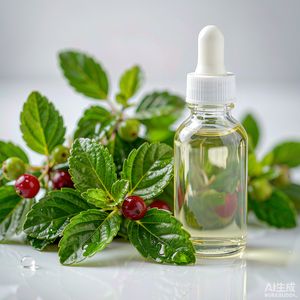
Holly (Wintergreen) Essential Oil (CAS 68917-11-1, INCI name -distilled essential oil standardized to >95% methyl salicylate, distilled from Gaultheria procumbens leaves. Baisifu supplies food-grade, BP/USP and Ph.Eur. equivalent batches from a Xi’an facility, with every drum shipped with a COA, allergen declaration and IFRA documentation.
Botanical identity and chemistry
Holly (Wintergreen) Essential Oil is the steam-distilled volatile oil obtained from the leaves of Gaultheria procumbens L., a low evergreen shrub of the Ericaceae family native to North American forests. The oil is dominated by methyl salicylate, an ester of salicylic acid whose clean, sweet, medicinal-minty character has made wintergreen a staple of pharmaceutical rubs, flavour and fragrance for over a century. The same marker occurs in sweet birch oil; the two are chemically near-identical but botanically distinct.
Distillation and standardisation
Leaves are macerated in warm water to allow enzymatic hydrolysis of the native gaultherin glycoside to methyl salicylate, then charged to a stainless-steel still for steam distillation at atmospheric pressure. The crude oil is decanted, dried and standardised in-house to a minimum of 98 percent methyl salicylate by GC-MS against a pharmacopoeial reference standard. Baisifu does not dilute with synthetic methyl salicylate; every drum is single-botanical-source wintergreen leaf oil.
Active profile by GC-MS
The GC-MS fingerprint is dominated by the methyl salicylate peak, with trace linalool, citronellol and 1-octen-3-ol making up the balance. Baisifu records the full chromatogram on each COA; the methyl salicylate floor and the absence of synthetic impurities confirm that the material is natural-source wintergreen rather than fortified synthetic methyl salicylate.
Physical and sensory behaviour
The oil is a clear, mobile, colourless to pale-yellow liquid with a density near 1.18 g/cm3, a refractive index around 1.536 at 20 degrees Celsius and a boiling point near 222 degrees. Its odour is a clean, sweet, deep medicinal-minty note with a persistent warm dry-down; in perfumery it is a powerful body-note material that blends with mint, floral and herbaceous accords and is the signature note of counter-irritant balm formulations.
Typical applications
Wintergreen Essential Oil enters the following formulation workflows:
- pharmaceutical counter-irritant rubs and balms
- medicated liniments and sports-care products
- confectionery and beverage flavours (where permitted)
- functional fragrance and soaps
- aromatherapy and wellness blends
- botanical insect repellent adjuvants
Formulation and blending notes
The oil is miscible with ethanol and fixed oils and soluble in propylene glycol at typical use levels. Methyl salicylate is a high-impact material and a sensitiser at elevated concentration, so the final leave-on level must respect the IFRA limit for the category. Wintergreen should not be used in products intended for young children or in applications where salicylate sensitivity is a concern; the material is also a natural source of salicylate and may be restricted in markets with low salicylate thresholds.
COA and batch documentation
Each drum ships with a Certificate of Analysis carrying the GC-MS chromatogram, methyl salicylate assay, specific gravity, refractive index, heavy metals (Pb, As, Cd, Hg) and pesticide residue screen. An allergen declaration, an IFRA conformity statement and a Statement of Origin complete the pack, giving QC and regulatory teams a single-shipment document set.
Regulatory and compliance
Methyl salicylate is listed as FEMA GRAS 2745 and is permitted in flavour applications where local regulation allows; some markets restrict wintergreen oil in food because of its salicylate load. The oil is permitted in fragrance applications under the IFRA Code of Practice, with a quantitative limit set for leave-on skin products. Under EU CLP the concentrated oil is classified as hazardous (aspiration toxicant category 1, skin sensitiser category 1), so Hazmat labelling and UN 1993 shipping names apply for bulk movement.
Packaging, storage and supply
Wintergreen Essential Oil is filled into 180 kg HDPE drums or 25 kg sample drums, nitrogen-blanketed and sealed under COA. Store in a cool, dry place away from direct sunlight; the recommended storage temperature is 15 to 25 degrees Celsius with a shelf life of 24 months from manufacture in original sealed packaging. Baisifu ships ex-Xi’an, MOQ 25 kg for sample development and 500 kg and above for production orders; standard lead time 7 to 15 days depending on batch availability, with express air freight on request.
Questions buyers ask
What methyl salicylate level can you guarantee?
The standardised grade is assayed by GC-MS to a minimum of 98 percent methyl salicylate against a pharmacopoeial reference standard; the exact figure and the full secondary fingerprint are printed on the COA of every drum.
Is this natural-source or synthetic methyl salicylate?
This is natural-source methyl salicylate from Gaultheria procumbens leaves; Baisifu does not dilute with synthetic methyl salicylate. The Statement of Origin and the GC-MS fingerprint on the COA allow buyers to verify the natural provenance.
Can this be used in food applications?
Some markets restrict wintergreen oil in food because of its salicylate load; the IFRA conformity statement and the allergen declaration flag the applicable limits. Buyers should confirm whether their target market permits methyl salicylate in the intended food application before committing.
Need a quotation for Holly (Wintergreen) Essential Oil?
Send us your spec, target quantity and destination port. Our team replies within one business day with COA, pricing and lead time.
Need specifications, COA, or a wholesale quote? Contact Baisifu — typical response within 24 hours.