
Synthetic Camphor (racemic)
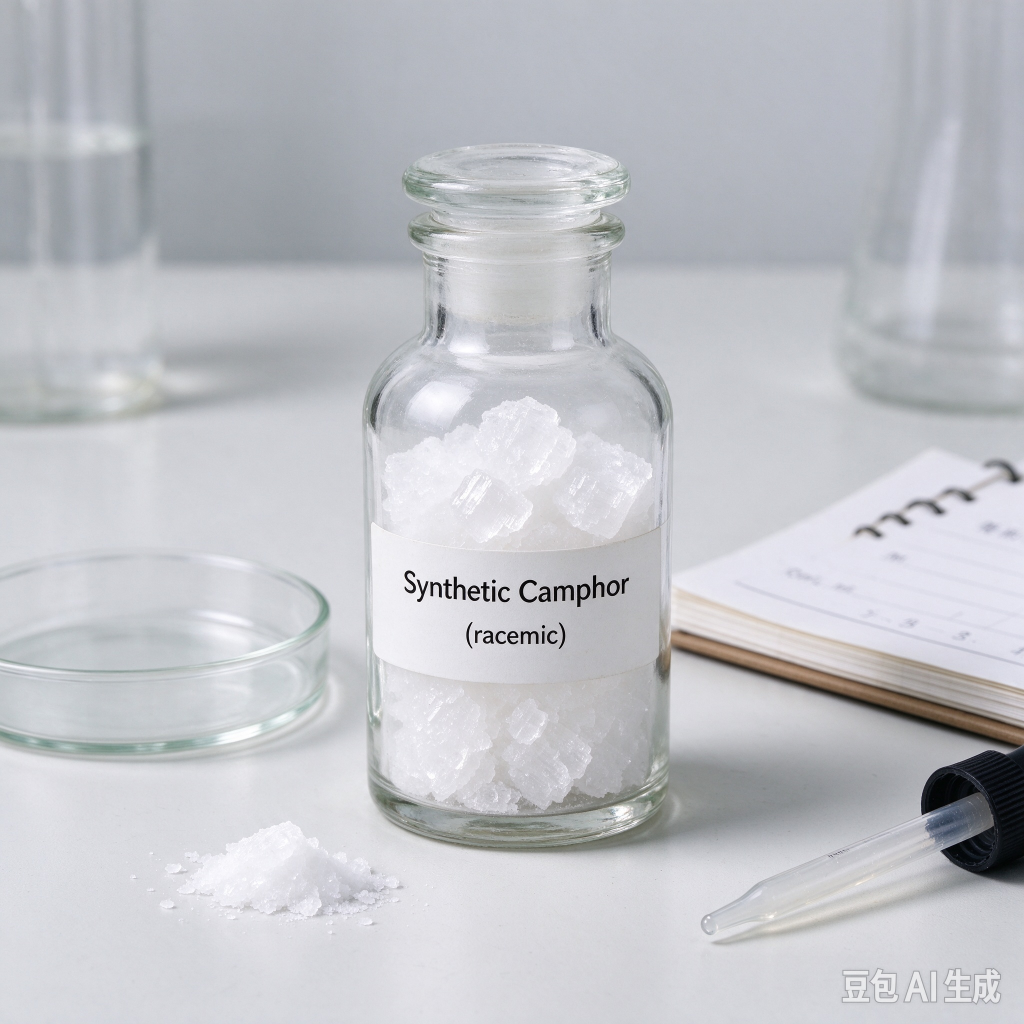
Synthetic Camphor (racemic) (CAS 464-48-2, INCI name -distilled essential oil standardized to >96% camphor, distilled from synthesized pinene feedstock. Baisifu supplies food-grade, BP/USP and Ph.Eur. equivalent batches from a Xi’an facility, with every drum shipped with a COA, allergen declaration and IFRA documentation.
What the compound is
Synthetic Camphor (racemic) (CAS 464-48-2) is the 50:50 (+/-)-camphor mixture produced by synthesis from turpentine-derived alpha-pinene. The material supplied here is a white, crystalline, translucent solid or powder standardised to a minimum of 96 percent racemic camphor by GC. It is chemically identical to natural camphor in molecular formula but carries zero net optical rotation, because the (+) and (-) enantiomers are present in equal proportion.
Synthetic route and standardisation
Alpha-pinene from gum turpentine is isomerised to camphene, esterified with acetic acid to isobornyl acetate, hydrolysed to isoborneol and finally oxidised to camphor. The crude product is purified by sublimation or recrystallisation to a minimum of 96 percent camphor by GC. Baisifu does not represent this material as natural-source; the Statement of Origin identifies the synthetic route and the turpentine feedstock provenance.
Identity and purity by GC
Every batch is assayed by gas chromatography against a pharmacopoeial camphor reference standard. The purity floor is 96 percent racemic camphor, with residual isoborneol, borneol and trace terpenes making up the balance. The optical rotation is measured and printed on the COA; it reads zero or near-zero, confirming the racemic identity and distinguishing the material from natural dextrorotatory camphor (CAS 76-22-2).
Physical and sensory behaviour
Synthetic Camphor is a white, crystalline solid at room temperature, melting near 174 degrees Celsius, boiling near 204 degrees and subliming readily in open air. Its odour is a sharp, penetrating, medicinal-camphoraceous note indistinguishable from natural camphor by smell alone; the material is a high-impact flavour and fragrance ingredient used at trace levels and a functional active in industrial, moth-repellent and plasticiser applications.
Typical applications
Synthetic Camphor enters the following formulation workflows:
- industrial plasticiser for cellulose nitrate
- moth and insect repellent blocks
- pharmaceutical rubs and balms (where permitted)
- pyrotechnic and ceremonial formulations
- industrial intermediate
- fragrance trace modifier
Formulation and blending notes
Camphor sublimes at room temperature, so it must be stored in sealed containers to avoid weight loss. It is soluble in ethanol, fixed oils and most organic solvents and disperses in propylene glycol on warming. Camphor is toxic in large doses and is subject to concentration limits in cosmetic and food applications; some jurisdictions require natural-source camphor for pharmaceutical use, and buyers should confirm the regulatory status of racemic camphor in their target market.
COA and batch documentation
Each drum ships with a Certificate of Analysis carrying the GC chromatogram, racemic camphor purity assay, optical rotation, melting range, heavy metals (Pb, As, Cd, Hg) and residual solvent screen. An allergen declaration, an IFRA conformity statement and a Statement of Origin identifying the synthetic route complete the pack, giving QC and regulatory teams a single-shipment document set.
Regulatory and compliance
Synthetic camphor is permitted in industrial and fragrance applications under prevailing regulations; pharmaceutical use may require natural-source camphor in some jurisdictions. Under EU CLP the material is classified as hazardous (flammable solid, aspiration toxicant category 1), so Hazmat labelling and the applicable UN shipping name apply for bulk movement. Buyers should confirm whether their target market accepts racemic camphor for the intended application before committing.
Packaging, storage and supply
Synthetic Camphor is filled into 25 kg or 50 kg fibreboard drums with an inner polyethylene liner, sealed under COA. Store in a cool, dry, sealed place away from direct sunlight and heat; the recommended storage temperature is below 25 degrees Celsius with a shelf life of 36 months from manufacture in original sealed packaging. Baisifu ships ex-Xi’an, MOQ 25 kg for sample development and 500 kg and above for production orders; standard lead time 7 to 15 days depending on batch availability, with express air freight on request.
Questions buyers ask
How is this different from natural camphor?
Synthetic camphor (CAS 464-48-2) is the racemic 50:50 (+/-) mixture produced from turpentine-derived alpha-pinene; natural camphor (CAS 76-22-2) is the (+)-enantiomer isolated from Cinnamomum camphora wood. The optical rotation on the COA confirms the identity: zero for racemic, positive for natural.
What purity can you guarantee?
The standardised grade is assayed by GC to a minimum of 96 percent racemic camphor against a pharmacopoeial reference standard; the exact figure, the optical rotation and the residual impurity profile are printed on the COA of every drum.
Can this be used in pharmaceuticals?
Some jurisdictions require natural-source (+)-camphor for pharmaceutical use; the Statement of Origin identifies this material as synthetic. Buyers should confirm whether their target market and pharmacopoeia accept racemic camphor before committing, and Baisifu can supply natural camphor (CAS 76-22-2) if the pharmaceutical grade is required.
Need a quotation for Synthetic Camphor (racemic)?
Send us your spec, target quantity and destination port. Our team replies within one business day with COA, pricing and lead time.
Need specifications, COA, or a wholesale quote? Contact Baisifu — typical response within 24 hours.